

12.03.2026 19:00
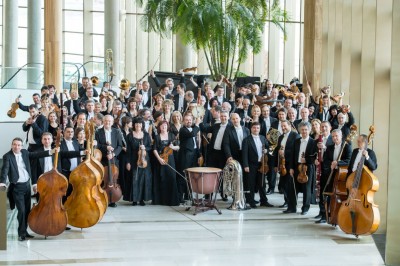
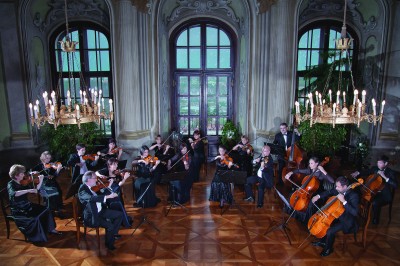
Savaria Symphonic Orchestra
Sold out!Keszthely, Balaton Színház
Filharmonia Season Ticket - Keszthely
Season tickets

Tickets are available at the Balaton Congress Centre and Theatre box office (Keszthely, Fő tér 3.; +36 83 515 232), at Ticket Express offices, and online at www.jegymester.hu.
Ticket Discounts
Students and pensioners are entitled to a 10% discount.
Filharmonia Hungary season pass holders receive a 20% discount on tickets for any adult concert organized and sold by Filharmonia anywhere in the country – simply by presenting their season pass!
The discount applies to one ticket per pass per concert. Discounts cannot be combined.
On our website, you can subscribe to our newsletter, where we provide updates on classical music programs organized by Filharmonia Hungary and notify you of any possible changes.
We reserve the right to change the programme, date, venue, and performers; ticket prices may be subject to change accordingly.


Subscriptions are available at the box office of the Balaton Congress Centre and Theatre (Keszthely, Fő tér 3; +36 83 515 232), at Ticket Express offices, and online at www.jegymester.hu.
Purchase a new subscription by 12 November 2026, valid until the first concert.
Individual tickets will be available starting 12 October 2026.
Filharmonia Hungary season ticket holders can purchase tickets with a 20% discount by showing their season tickets! The discount applies to one ticket per subscription, per concert.
We reserve the right to change the programmes, dates, venues, and performances, and ticket prices may change accordingly.
We often judge a composer by a single famous work — but this concert will convince you that every artist has many faces.
If we look closer, from Beethoven through Liszt to Bartók, we can trace an unbroken line of teacher–student relationships. In that sense, they could almost be seen as members of the same “school” — united by a deep sense of artistic mission, though each expressed it in a distinctly different way.
Let’s see how:
Beethoven’s Piano Concerto in C minor was written around the time of the Eroica Symphony and Fidelio, when the composer saw himself as a kind of heroic freedom fighter. Yet in the slow movement of this concerto, it is as if he lays down his weapons to reveal his most honest, vulnerable, and profoundly human side.
Bartók’s Romanian Folk Dances were composed during the turbulent 1910s, when he was deeply engaged in the folk music of Transylvania. These dance melodies were arranged both for piano and orchestra. Unlike in Hungarian Sketches, where Bartók invented folk-like melodies and characters of his own, here he transforms authentic folk tunes. The dance rhythms and vivid characters are ever-present, but the best-known movement, Evening in Transylvania, has become so beloved that many Székely people still sing it as a traditional folk song — unaware that it was composed by Bartók himself.
Franz Liszt’s symphonic poem Prometheus shares the same spirit as the artistic creed of Beethoven and Bartók: bringing fire to humankind, defying the gods, and embracing suffering in order to make the world a better place. Liszt’s passionate, Romantic orchestral work vividly portrays the mythological story of Prometheus.
Experience the great ideas and rich variety that inspired these composers — all in one unforgettable concert!